This blog post assumes that readers are familiar with the mentioned technologies. In other words, there won't be introductory explanations.
Combinations of four cryptography libraries (aws-lc-rs, Graviola, ring, OpenSSL), three key agreements (Secp256r1, Secp384r1, X25519), five signing algorithms (EcdsaSecp256r1Sha256, EcdsaSecp384r1Sha384, Ed25519, RsaPssRsaeSha256, RsaPssRsaeSha384) and three cipher suites (Aes128GcmSha256, Aes256GcmSha384, Chacha20Poly1305Sha256) were tested in the WTX project to evaluate the impact they have on TLS handshakes.
The TLS handshake may seem trivial but it is a dense process that involves everything from hashing and key agreements to encryptions, thus the push for stuff like 0-RTT, raw public keys, PSK, signatureless certificates, etc.
All certificates and applications are available at wtx-bench.tar.xz where you can run everything in your own machine through the execution of the assets/bench.sh script.
Post-quantum algorithms were excluded as they are not yet supported by WTX. Feedback and corrections are welcome.
Methodology
Applications start the decoding of 3 PEM file contents (public key, secret key, root ca) that are later added to the main TLS configuration structures. A TCP server listens to connections in the main thread while a TCP client initiates the sending of a ClientHello with the intended algorithms in another thread. Once each party finishes the TLS handshake via the processing of the Finished record, the application immediately closes itself without exchanging application data frames.
While the decoding of PEM data and the use of TCP add overhead to the evaluated numbers in the sense that they hide the "true" performance cost of each algorithm, such features are tolerated in the name of convenience :)
After all 36 (4 x 3 x 3) builds are finished, each one of them are sequentially measured with the help of the hyperfine binary that finally outputs all results into a CSV file.
Hardware
Kernel: Linux fedora 7.0.11-200.fc44.x86_64 #1 SMP PREEMPT_DYNAMICProcessor: AMD Ryzen 9 5900X 12-Core ProcessorDisk: Corsair Force MP510Memory: 32GB DDR4
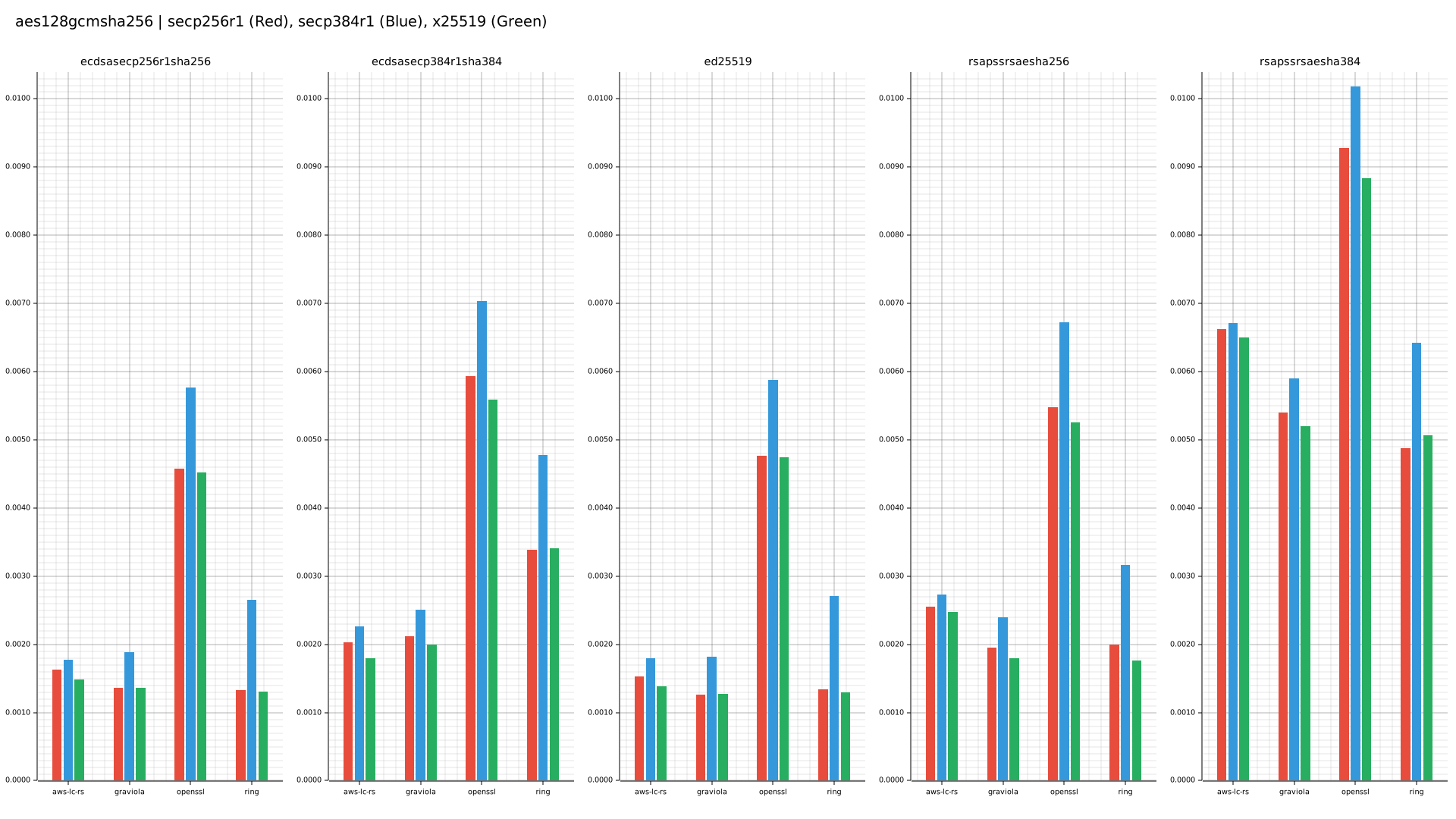
Aes128GcmSha256
Execution time in seconds. Lower is better.
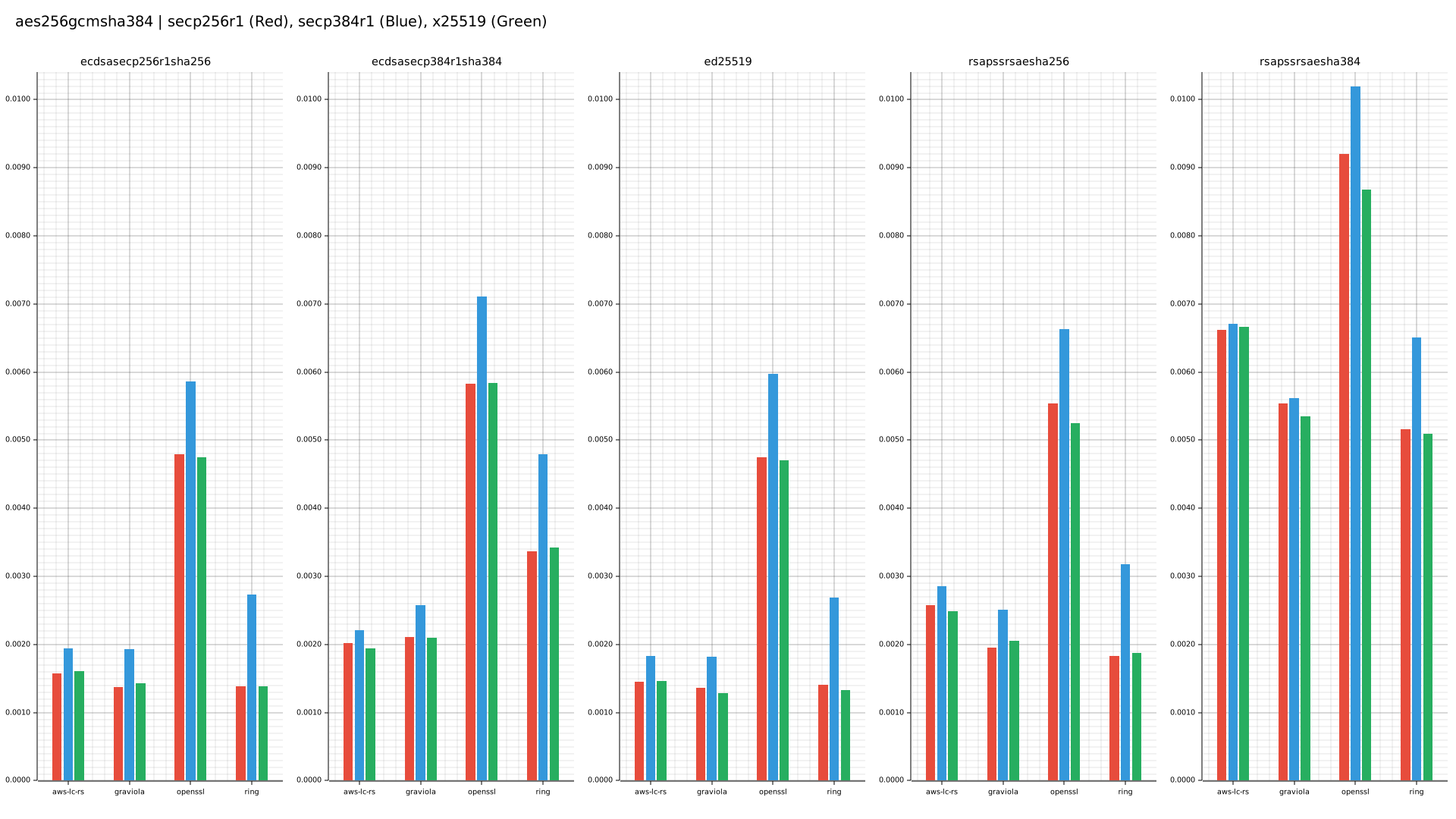
Aes256GcmSha384
Execution time in seconds. Lower is better.
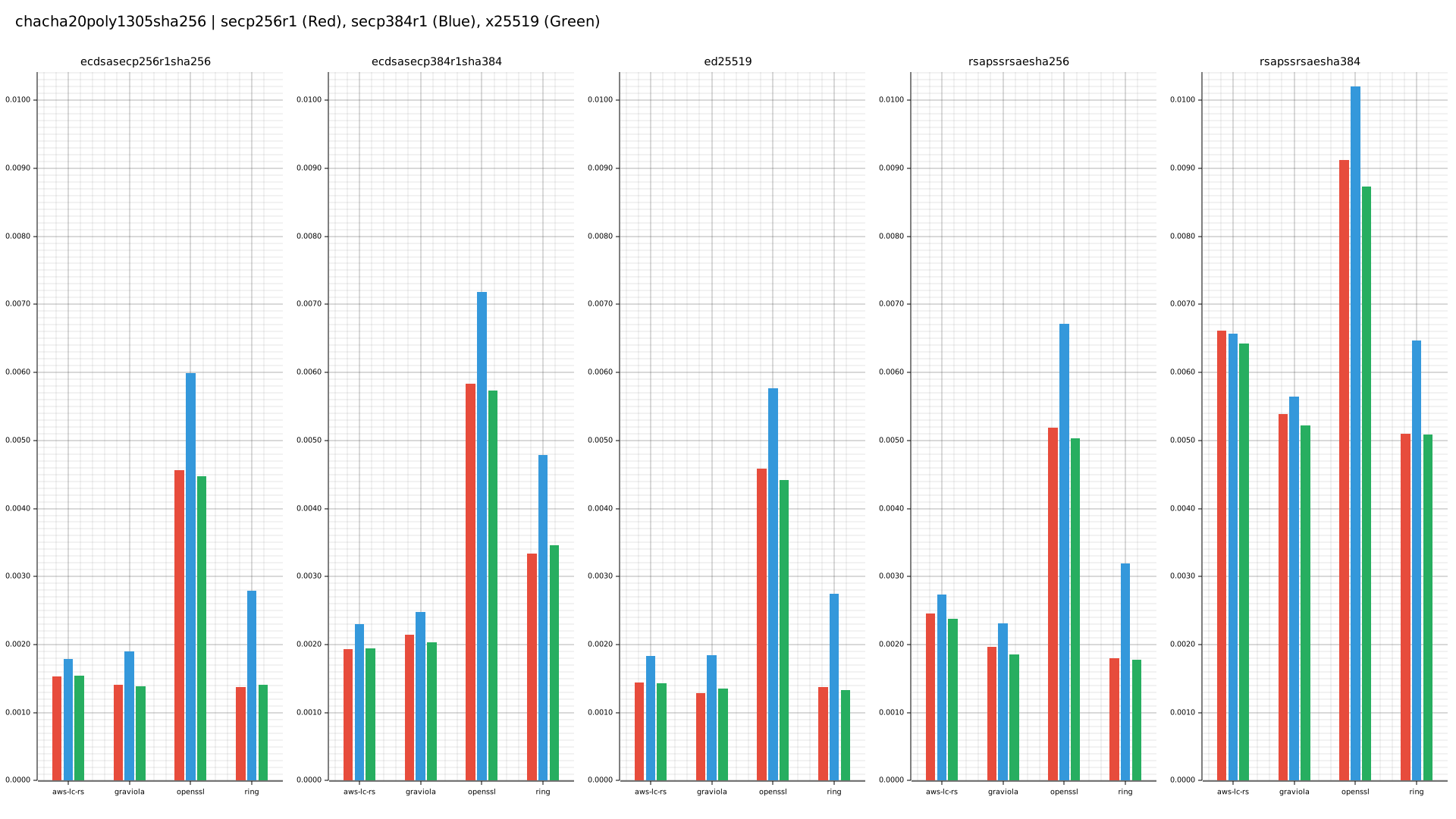
Chacha20Poly1305Sha256
Execution time in seconds. Lower is better.
Findings
-
OpenSSLis the slower library. It is unknown if the root cause is a missing compile flag, an internal misconfiguration, theopenssl-syscrate orOpenSSLitself. -
Aes128GcmSha256,Aes256GcmSha384andChacha20Poly1305Sha256showed nearly identical values across all scenarios. -
There seems to be room for optimization in
scep384r1(Key Agreement) for bothOpenSSLandring. -
Graviolais a promising new cryptography library. -
Looks like
aws-lc-rsis not as fast asringorGraviolawhen dealing withRSA-PSS.